Pavilion from the Ocean

Pavilion from the Ocean

Welcome to iPavilionCondo.com

This forum, by owners for owners, provides useful information for owners to view and discuss.

This blog does not belong nor represents the views of the Pavilon Condo Association

You can subscribe to the blog by entering your email on the upper hand side on the blog. You will then receive an email with a link that you must click on to complete the subscription. Then every time the blog is updated you will receive an email message.

We heard it through the grapevine...


We hear that Valet parking after the first car is going up to $120 a month.  More than a 118% increase.


Miami Beach condos owned by convicted mobster hit auction block


Three luxury condo units owned by convicted loan shark Mel Cooper go on the auction block Thursday following the bankruptcy of a company he owns.
After a legal feud with his son, the one-time mob associate has lost control of the three apartments at the Fontainebleau II, a luxury condo tower nestled in South Beach’s Fontainebleau resort complex.
Live bidding will start at $660,000 for a studio and $1.63 million for a package deal that includes a one-bedroom and a studio. The auction will take place at 12 p.m. at two locations: the Holiday Inn near the Fontainebleau and the U.S. bankruptcy court in New York City.
Don’t come to gawk and think you can sneak in a bid: Deposits of $40,000 are required for the studios and $60,000 for the one-bedroom.
Cooper was convicted in federal court in 1985 for a loan sharking operation that prosecutors said was linked to the Gambino and Colombo organized-crime families, and served about eight years in prison. The case was part of a crackdown on mobsters by then-U.S. attorney Rudy Giuliani.
After serving his time, Cooper was involved in several different businesses, including a long-distance phone company. But he stayed out of the headlines until 2004, when he sued a former girlfriend to recoup the money he spent on her before she dumped him — $392,000, including interest — according to a report in the New York Post.
During Miami’s real estate boom, Cooper wanted a piece of the action.
In 2005, he bought two units at the Fontainebleau II for a combined $1 million. His son David bought a third for $440,000.
According to bankruptcy filings, Cooper rented out the units as hotel rooms, which the Fontainebleau allows. But management at the resort at 4401 Collins Ave. had been holding onto $700,000 Cooper earned because he and his son were fighting over who actually owned the units.
With no income coming in, Imperial and Cooper filed for bankruptcy. A trustee appointed by a federal court in New York will handle the auction.
Cooper could not be reached and his attorney, Alan Stein, declined to comment. In court documents, Cooper denied a creditor’s charge that he had been an “organized crime boss,” although he admitted that he had done time for a felony conviction.
New York-based Maltz Auctions is in charge of the sale. Richard Maltz, the firm’s president, said he didn’t know about the units’ shady past. But he said the hotel rental program would provide a “very strong revenue stream” for buyers. Studios are going for about $450 per night this summer.
Will the publicity of the units’ mob ties help draw more bids, a reporter asked?
“No comment,” Maltz replied.


Read more here: http://www.miamiherald.com/news/business/real-estate-news/article23702479.html#storylink=cpy


Read more here: http://www.miamiherald.com/news/business/real-estate-news/article23702479.html#storylink=cpy

Pollo Tropical in South Beach sells for almost $5 million


A South Beach property that’s been home to a Pollo Tropical since 1994 sold for about $4.92 million on Monday — roughly the price of 616,000 chicken-and-rib platters at the popular, Latin American-style fast food joint.
The restaurant sits on a busy corner at 15th Street and Alton Road. 
“It’s very visible and there’s a lot of walking traffic and cars going by because it’s on the way to Lincoln Road,” said Benjamin Silver, a broker whose team at Marcus & Millichap handled the sale.
The 15,700-square-foot lot is well suited for more extensive commercial or residential development, Silver said. But Pollo Tropical has 18 years left on its below-market-rate lease at the building.
The chicken restaurant pays about $22 dollars per square foot in rent — two to three times less than the going rate for that part of South Beach, according to Silver.
That means the buyer, a Latin American-based investor whom Silver did not have permission to name, will have to be patient.
“They’re buying it as a long-term play,” Silver said. “There’s significant upside in terms of the potential for increasing the rent or redeveloping the property.”


As waterfront land dries up, developers rush to Miami River


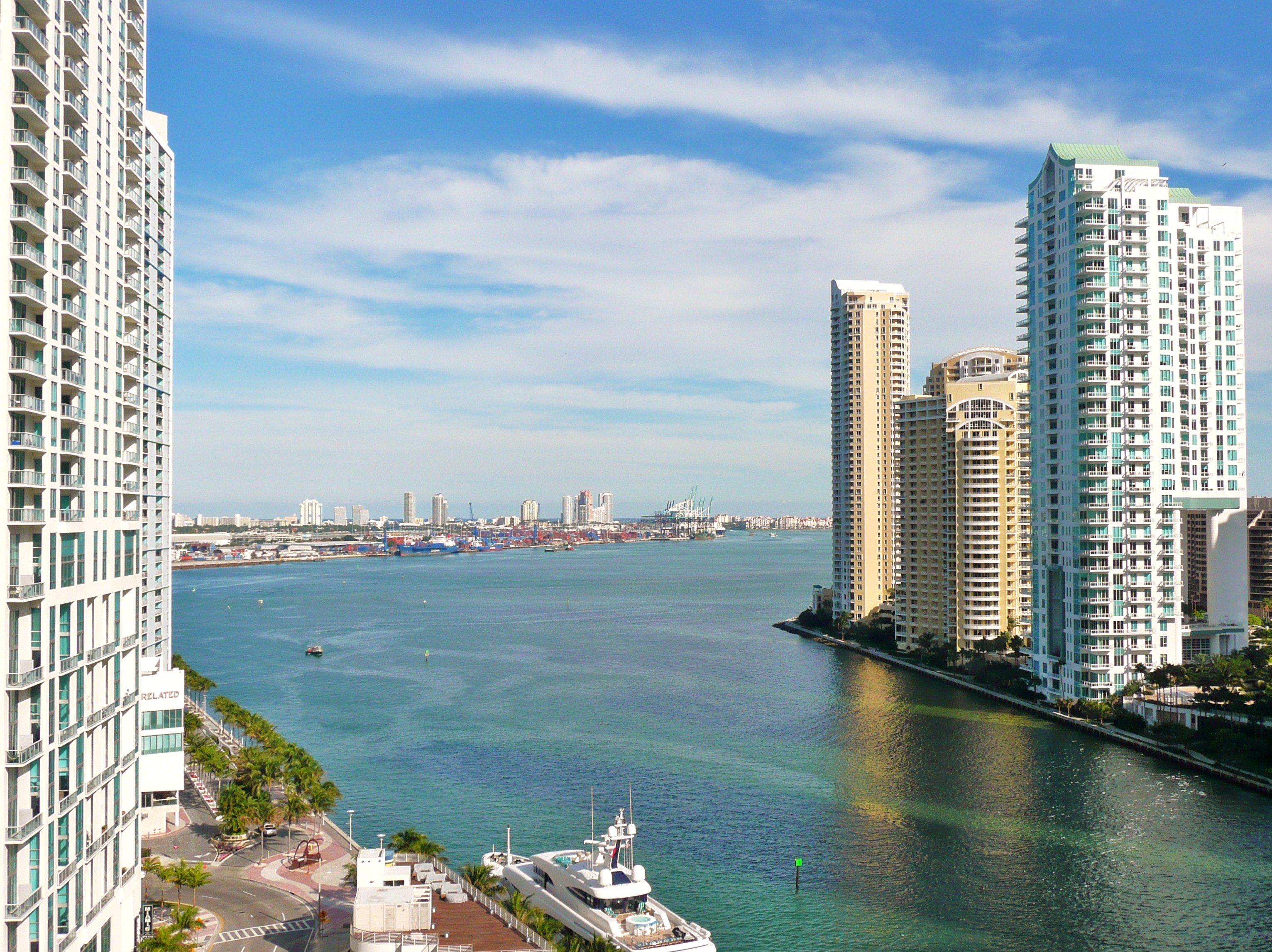
June 07--The Miami River -- once a polluted, industrial backwater known as a favored route for smugglers -- is today teeming with developers who want to build on what is practically the city's last remaining waterfront land.
"It's the new waterfront for Miami," said Nelson Stabile, a principal at the developer Integra Investments, which invested in two vacant river lots during the recession and flipped them at a profit of more than $21 million last year. "If you want to be near the urban core of Miami, it's becoming impossible to find waterfront properties."
Near the delta where the river meets Biscayne Bay, developers plan to build ultra-luxury condo towers with units at multimillion dollar price points rivaling waterfront Brickell and Miami Beach. Further inland, large mixed-use projects and rental buildings are being designed for locals amid the boatyards, shipping terminals and bait-and-tackle shops of what has long been a "working" river.

Miami's Condo Craze Burns Out on Strong Dollar


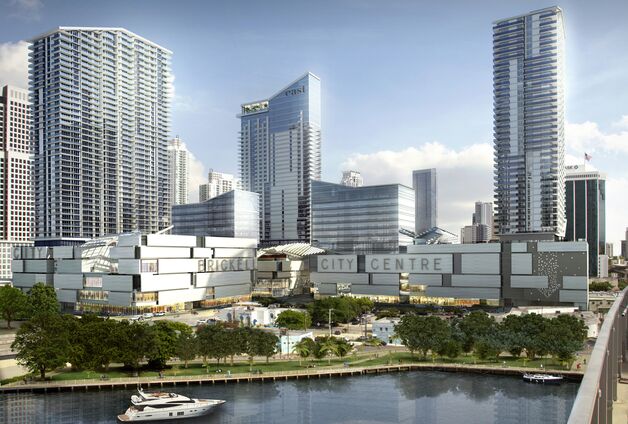
The sales office for condominiums at Miami’s Brickell City Centre attracted more than 100 visitors daily last year, with prospective buyers crowding in and snapping selfies beside a scale model of the $1 billion project.
Now, the flow of people has trickled to about a quarter of what it once was.
“Buyers are asking really good questions” instead of rushing into deals, said Stephen Owens, president of the U.S. unit of Hong Kong-based Swire Properties Ltd., the developer of the 9-acre (3.6-hectare) condo, hotel, office and shopping complex. “Two years ago, it was, ‘Where can I sign?’”
Downtown Miami’s luxury-condo boom -- fueled by buyers from Latin America and Europe willing to pay half the purchase price up front -- is becoming a casualty of the year-long climb in the U.S. dollar. Diminished purchasing power and rising prices are holding back the overseas investors that make up the bulk of sales at new towers, cooling a frenzied market.
In response, developers are delaying projects, lowering down-payment requirements and turning their focus to Americans.
“We’ve seen a very strong shift in the last year in the dollar -- it has literally pushed whole countries out of the marketplace,” said Kevin Maloney, founder and principal of Property Markets Group, which is developing Echo Brickell, a 57-story luxury tower that will have a shark tank in the lobby.
“We look around as real estate guys and say, ‘Jeez, who is our buyer?’” he said. “Now you are going to allocate more of your dollars to domestic United States.”

One Tower

Developers have broken ground on more than 7,600 new condo units since 2011, when construction resumed after the last crash, according to a report scheduled for release next week by the Miami Downtown Development Authority. After starting 16 major downtown towers in 2014, builders began work this year on just one. Sales of new condos slowed and prices flattened in the first quarter, the report showed.
More than 3,000 condo units planned for construction are at risk of delay, said Anthony Graziano, senior managing director at Integra Realty Resources Inc., which prepared the report. He estimates that international buyers account for as much as 95 percent of downtown’s new-condo market.
“We’re basically going to be in a period of slower growth for the next year, year-and-a-half while the market stabilizes,” Graziano said. “I characterize it as a healthy correction.”

Falling Currencies

South Florida had a higher share of international homebuyers than any U.S. market last year, led by purchasers from Venezuela, Argentina and Brazil, according to a survey released in April by the Miami Association of Realtors. Those countries, along with Russia and parts of Europe, have seen their currencies plunge against the dollar amid political and economic unrest.
Aaron Drucker, managing broker for Miami-Dade County at Redfin Corp., said condo prices in the downtown area may fall 1 percent to 3 percent in a “mini-correction.”
During visits to six sales offices last week, agents mostly outnumbered buyers. Developers are seeking to lure visitors with glitz, piping dance music onto the sidewalk, setting up lounge chairs overlooking the water, or offering valet parking. The sales office at the Brickell Flatiron is also an art gallery designed by artist Julian Schnabel.


Miami-Dade property values up 8.6 percent


Property values surged 8.6 percent across Miami-Dade last year, priming local governments for a windfall in tax revenue in 2016 and offering another measure of a surging real estate market.
New estimates from the county’s Property Appraiser detail the second housing boom under way along the coast, with waterfront cities posting some of the largest gains. Sunny Isles Beach took the top spot, with a 15.7 percent gain. No city saw more valuable new construction than Key Biscayne, which recorded an additional half-billion dollars’ worth of real estate when 2015 began.
Suburban jurisdictions saw less explosive growth, and some Miami-Dade cities fell well below the average. And the countywide total is still about 7 percent below the peak set in 2009. But with property values countywide beating forecasts for 2015, Monday’s report details the fiscal breathing room that a seller’s market can provide.
“We’re seeing a lot of new construction all over,” said Pedro Garcia, the county’s elected property appraiser. “It really was not a surprise. We saw it coming.”
The higher values could put pressure on some elected leaders to roll back tax rates in order to keep actual tax bills from rising next fall. In Miami-Dade, budget officials had forecast a 5.5 percent in taxable value countywide for the 2016 budget year. Existing properties saw their taxable values increase 7.3 percent. An added $2.7 billion worth of new construction boosted the gain to 8.6 percent.


Read more here: http://www.miamiherald.com/news/local/community/miami-dade/article22809420.html#storylink=cpy