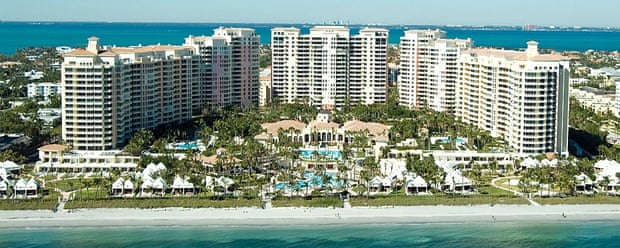
Pavilion from the Ocean

Pavilion from the Ocean

Welcome to iPavilionCondo.com

This forum, by owners for owners, provides useful information for owners to view and discuss.

This blog does not belong nor represents the views of the Pavilon Condo Association

You can subscribe to the blog by entering your email on the upper hand side on the blog. You will then receive an email with a link that you must click on to complete the subscription. Then every time the blog is updated you will receive an email message.

Miami’s biggest developer is pumping the brakes on downtown condo tower

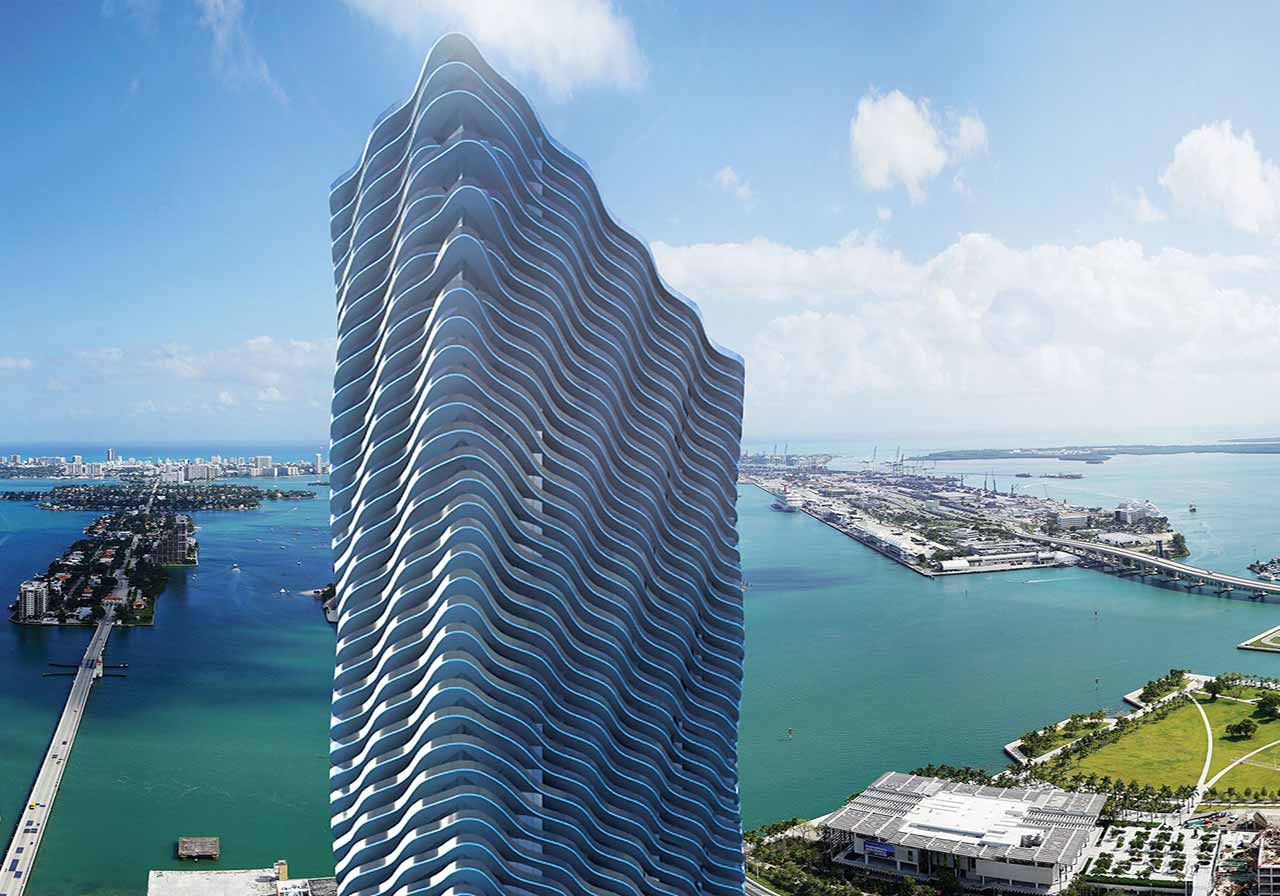
No one can escape the chill creeping into Miami’s luxury real estate market. The Related Group, South Florida’s biggest condo developer, confirmed Wednesday it would delay construction on a 298-unit project called Auberge Residences & Spa Miami.

“The market is slower,” said Carlos Rosso, president of Related’s condo division. “The dollar has appreciated a lot against Latin American currencies.”

Groundbreaking was originally set for 2017. Rosso said he wasn’t sure yet how long the project at 1440 Biscayne Blvd. would be delayed. “Do you have a crystal ball?” he asked.

A cascade of foreign buyers pushed Miami real estate into overdrive after the recession but has since dried up. Rosso says the slowdown doesn’t worry him and sales will continue at Auberge.

“We have to be a little more patient with this market,” he said. “I think it’s very good for all of us that the market takes a breather.”

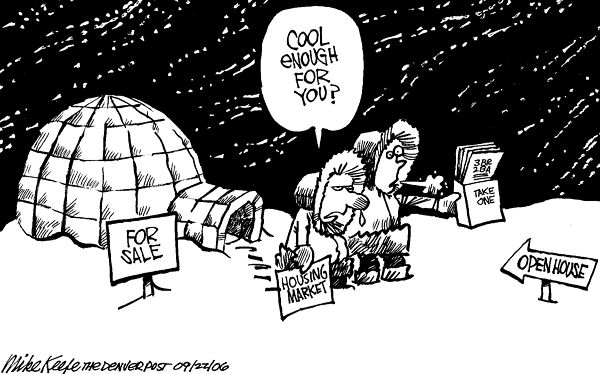
Land prices have escalated, leading to fights over prime properties. And a glut of inventory means existing condo prices in downtown Miami fell for the first time in five years.

The Real Deal first reported the delay at Auberge, the first-phase of a three-tower development.
The project has pre-sold 15 percent of its units, according to a second quarter report from brokerage International Sales Group. Developers generally need to sell two-thirds of their units before they start building.

In July, Bloomberg reported that Related CEO and chairman Jorge Pérez was making plans for his sons to take over the company. His eldest, Jon Paul, was put in charge of marketing for Auberge.
Slumping sales across the market should come as no surprise given the lack of foreign buyers, said analyst Tony Graziano, who authors regular reports on the condo market for Miami’s Downtown Development Authority.

Other developers have put projects on hold, including Boulevard 57 in Miami’s Morningside neighborhood.

“Bank financing for development in Miami right now is dicey,” Graziano said. “It’s harder for banks to do their due diligence because there’s no way to accurately forecast how many foreign buyers will come.”

He added that smaller, boutique projects may have a better chance of hitting sales targets.

The federal government has also put pressure on buyers. Over the last year, it handed down new disclosure rules for certain kinds of cash home deals in Miami, along with other luxury markets around the country including New York, Los Angeles and San Francisco. Regulators suspect luxe properties are being used to launder money.

  1. Read More: http://www.miamiherald.com/

#Miami home sales fall in second quarter as market cools

A tight market for mid-range homes in Miami-Dade County drove up prices in the second quarter of 2016, but the overall number of existing home sales fell.

There were nearly 7,500 existing home sales in Miami-Dade between April and June, down from roughly 8,300 during the same period last year, according to the Miami Association of Realtors. That’s a 9.7 percent year-over-year drop. Single-family home sales fell 7 percent, faring better than condos, which dropped 12 percent.

Foreign buyers have pulled back from Miami real estate as the dollar strengthens, hurting sales. A lack of foreclosure inventory is also cooling the market.

But the middle of the market remains hot, meaning locals will continue struggling to close affordable deals. The number of single-family home sales in the $200,000-to-$600,000 price range rose 6.2 percent during the second quarter. And the number of condo sales in the $150,000-to-$300,000 range rose 6 percent.

Strong sales activity for middle-class homes means prices are continuing to rise overall. The median price for a single-family home in Miami-Dade hit $295,000 in the second quarter, an 8.6 percent year-over-year jump. The median price for a condo rose to $215,000, a 5.5 percent increase.

FREE Condominium Workshop City of Miami Beach


Condominium Elections, Rules and Official Records/Board Member Certification

Hosted by the City of Miami Beach and presented by the Department of Business and Professional Regulations, Division of Condominiums, Bureau of Compliance.

Monday, August 22, 2016
3 p.m. - 6 p.m.

Miami Beach City Hall
1700 Convention Center Drive
3rd Floor, Commission Chambers
Miami Beach, FL 33139

Contact: Claudia Rodriguez,305.673.7575 ext. 6620 claudiarodriguez@miamibeachfl.gov 

"All because of the Galbuts": Owners at #MiamiBeach South Beach’s Shelborne fight $30 million assessments, foreclosure


Article Courtesy of The Florida Bulldog
By Francisco Alvarado   
Published August 12, 2016

For the past four years, about 40 investors and snowbirds who own 42 rooms in a landmark oceanfront art deco hotel have been locked in a pitched court battle with one of Miami Beach’s most politically connected families to keep their units.

An ongoing civil lawsuit in Miami-Dade Circuit Court alleges that Miami Beach developer Russell Galbut, along with relatives and business associates, broke Florida condo association laws by passing nearly $30 million in illegal assessments for renovations at what is now the Shelborne Wyndham Grand South Beach. That works out to roughly $107,142 per room.
Ronald M. Rosengarten of the Greenberg Traurig law firm represents Shelborne Property Associates.

“While it is true that friends and supporters of the Galbut family projects may sit on the board, the Galbut family does not ‘control’ their votes,” Rosengarten said. “Currently, Galbut family related entities only have a minority interest in the Shelborne, owning less than one sixth of the units and certainly do not control the units.”

Rosengarten said court records also show the Galbuts’ renovation of the Shelborne “has been a financial boon for the unit-owners and not a fraud.”

Built in 1940, the iconic hotel at 1801 Collins Avenue was entirely owned by Galbut and his relatives in the 1980s. A decade later, the Galbuts began selling some of their units to outside investors when the property was converted to a condo-hotel, according to the 10 owners and Rosegarten. The new owners were allowed to rent their rooms to tourists through a Galbut entity that managed the hotel or other companies that provided booking services.

Galbut family big political contributors
Galbut family members and companies they control have contributed tens of thousands of dollars to political committees supporting Miami Beach city commission candidates. Through six companies he controls, Russell Galbut also has raised $10,000 for a PAC supporting Miami-Dade Mayor Carlos Gimenez’s re-election. Three Galbut family members have contributed a combined $15,100 this year to Republican congressional candidates including Sen. Marco Rubio, and Republican U.S. Reps. Carlos Curbelo and Ileana Ros-Lehtinen.

Things began going awry in 2010, a year after management of the Shelborne was handed over to Menin Hotels, a company controlled by Galbut and his cousin, Keith Menin, the lawsuit states. From 2006 through the beginning of 2015, Menin also served on the condo association board. The lawsuit alleges Menin and the board voted in favor of a $15 million renovation in 2011 to redo the Shelborne’s common areas, from the hotel hallways to the lobby to the pool deck without obtaining approval from at least 75 percent of the unit owners as required by state law.

Yet the non-Galbut owners still got a bill for the $15 million through a series of special assessments between 2011 and 2012.

“Keith Menin knows the Menin Alterations are unlawful,” the lawsuit states. “But he caused or allowed the partnership to make them anyway.”

The lawsuit also claims that Joan Brent, the other Galbut cousin who served on the condo association’s board from November 2011 and June 2013, knew the Menin Hotels renovation was unlawful.

Barely a year later, Galbut and his alleged surrogates signed an agreement with Wyndham Hotel Management allowing them to market 125 rooms and the common areas of the hotel under the Wyndham brand, the lawsuit states. The non-Galbut owned-rooms were not part of the deal.

Despite just finishing the $15 million update to the building, the condo board initiated another renovation project in the summer of 2014 in order to meet Wyndham standards, the lawsuit states. This time, the non-Galbut owners were assessed a combined $28.7 million, according to the complaint.

Again, the condo board did not obtain consent from 75 percent of the owners, the lawsuit alleges. It also says Galbut, Brent, Menin and their allies on the board devised a plan to lie to the non-Galbut owners about the extent of the renovations – saying only that they were replacing the Shelborne’s windows and making repairs required by the City of Miami Beach.

In the ensuing months, the lawsuit say, the non-Galbut owners learned that the scope of the work was much bigger than they were told and that the developer and his cohorts barred them from entering the hotel, preventing them from seeing what was actually happening in the building.

“While the property was closed, the conspirators caused or allowed the structure to be completely gutted,” the lawsuit states. “By closing the property, the unit owners were simultaneously deprived of the use and income generated by their residential units.

Many Shelborne owners “forced to sell”


Predictably, many members could not afford this wave of special assessments with or without the building being closed so they were forced to sell their units.”

The lawsuit also notes that Shelborne Property Associates obtained a $125 million loan around the same time the deal with Wyndham was signed. The proceeds were used to buy rooms from non-Galbut owners who wanted out, the lawsuit alleges. Court and property records confirm that Galbut-owned shell companies purchased 120 units at the Shelborne since 2012, the complaint alleges.

“There were not $125 million worth of units for sale when Shelborne Property Associates obtained this financing,” the lawsuit alleges. “But SPA knew that the association was about to levy tens of millions of dollars of additional special assessments against its members, and close the condominium property for over a year.”

The purchases gave Galbut controlled entities 75 percent ownership of the Shelborne, and the board the necessary majority to approve the Wyndham renovation after the construction had already begun.

A non-Galbut owner who identified himself as “Jackie” said Galbut and his accomplices are squeezing them out because they don’t want to pay them fair market value for their rooms. “They saw that Miami Beach real estate in general was skyrocketing, especially beachfront hotels,” Jackie said. “Rooms have been going for $700,000 to $800,000 a room. That was the case with Raleigh Hotel, the SLS South Beach and the Shore Club.”

According to a review of some of the Shelborne units purchased by Galbut-related entities in the last four years shows rooms have sold for an average between $150,000 and $250,000. Rosengarten countered that non-Galbut owners who sold rooms to his client got good deals.

“Property records evidence that the overwhelming majority of transfers occurred in sales whereby the owners received vastly greater prices for the units they sold compared to what they paid for them,” Rosengarten said. “In other words, the condo owners were not victims but were beneficiaries of the increasing valuation which resulted from maintaining and improving the building.”

Adding insult to injury, construction workers entered their units without their consent and destroyed their rooms, the non-Galbut owners allege. “When we finally gained access to our units, we found our rooms completely wrecked,” said the New Yorker who owns two rooms. “They demolished my kitchen, my bathroom and my living room. They never repaired the damages.”

The owner said city inspectors flagged his units for 20 life safety violations and told him he couldn’t use the rooms until he fixed it. He spent close to $25,000 per room after paying nearly $40,000 in special assessments, he said.

Another owner, a retiree who lives in Atlanta, said she had to dip into her 401K to finance her repairs. She had plans to live out her retirement in her Shelborne unit.

“In anticipation of losing my unit, I tried to buy a house,” she said. “But I was denied a mortgage when the bank saw I was shelling out these huge sums of money and that my income had dropped to $50,000 a year. All because of the Galbuts.”


Mexican president's family faces calls for investigation into #Miami apartment


Political and civil society leaders in Mexico are calling for an investigation into the first family’s use of a luxury apartment in Miami, which has raised the spectre of a fresh conflict-of-interest scandal.
Opposition parties demanded that authorities probe the property arrangement between a Miami-based Mexican businessman and Angelica Rivera, the wife of President Enrique Peña Nieto.

Mexican newspapers and social media have led an outcry, alleging cronyism, since the Guardian reported the arrangement on Tuesday.

The revelation has prompted fresh scrutiny of the embattled president’s ethics following an earlier scandal over his family’s purchase of a Mexico City mansion, known as the Casa Blanca, from a government contractor.

Suspicion in the latest case focuses on why the businessman, Ricardo Pierdant, let the first lady use the $2.05m Miami apartment – and also why one of his companies paid close to $30,000 in property taxes on her behalf for a neighbouring apartment which she owns.

Pierdant is a close friend of the first family and his company, Grupo Pierdant, was expected to bid for lucrative contracts to run Mexico’s ports.

The first lady cannot receive lucrative favours without authorisation from the federal executive’s legal counsel, an oversight agency, wrote Salvador Camerana, a columnist, in El Financeiro. “The president of the republic cannot accept that his friends extend favours worth thousands of dollars to him, his wife, their children, or to their collaborators.”

Eduardo Bohorquez, head of the advocacy group Transparency International’s Mexico chapter, told the Wall Street Journal that the first couple faced renewed scrutiny. “It reignites the discussion over the links that the president and his wife have with businessmen, particularly the type of relation that they could have with someone who pays your property taxes.”

The two main opposition parties, the National Action party (PAN) and Party of the Democratic Revolution (PRD) have asked for an investigation into the Miami apartments, which are in Ocean Tower One, a gated community with a pool, tennis courts and white glove concierge in Key Biscayne, an affluent enclave in Miami-Dade County.

Such a probe would likely be the responsibility of federal auditors and the comptroller’s office.
In a statement, Eduardo Sánchez, the president’s spokesman, said that the first lady used Pierdant’s apartment only on rare occasions and that there was no conflict of interest because the businessman had no federal government contracts and was not participating in current bids.

The spokesman declined to say why Pierdant’s company, Biscayne Ocean Holdings, paid taxes in 2014 on the first lady’s apartment, unit 404, which is directly beneath his own unit 304.
In a statement the spokesman also questioned the Guardian’s veracity and claimed the newspaper had apologised several years before over a separate story about the president. The Guardian has not apologised for its reporting.

Pierdant, the co-founder of DecoBikes, a bicycle-sharing program in Miami and San Diego, has declined to speak to the Guardian, but a Mexican news website quoted him saying the first lady, a former telenovela star, asked him to handle the property tax and reimbursed him.

At the time Pierdant bought the Key Biscayne apartment in 2009 he was overdue on mortgage payments for another Coral Gables property, according to court documents seen by the Wall Street Journal. Asked by Univision how he could afford to pay one apartment in cash while owing money on another property, Pierdant was quoted: “I had the money available.”

The outcry over the first family’s property dealings in Miami comes at a delicate time for Peña Nieto, who is battling a sluggish economy and rampant crime. A poll taken before the current row showed his approval ratings dropping to 23%, his worst showing since taking office in 2012. The newspaper Reforma said it was the lowest approval rating for a president since it began publishing similar polls in 1995, just after a massive currency devaluation.

The Miami property arrangements have fuelled unease because they echo aspects of the first lady’s purchase of a $7m mansion in Mexico City from another businessman with government contract – the so-called Casa Blanca (White House) scandal.

It landed like a bombshell in 2014, wrecking Peña Nieto’s reformist credentials and reviving long-standing concerns about corruption in the ruling Institutional Revolutionary party (PRI).

The first lady later returned the property and last month Peña Nieto apologized, saying the scandal had dented faith in the presidency and government. “For this reason, with all humility I ask your forgiveness.”

The president made the apology as he signed into law an anti-corruption system that his PRI party hopes will boost its credibility in the run-up to the 2018 presidential election.

Miami Vice: Citi Bike #Miami founder paid property tax for Mexican first lady’s condo

Downtown Miami Condo Prices Took a Nosedive for the First Time in Five Years

Article Courtesy of The Miami New Times
By Jerry Iannelli

Since the 1980s, Miami residents have been able to judge their city's relative economic health by counting the number of cranes in the sky. More than ten? Congrats, the city is in the midst of a housing bubble. Zero? Recession.

Right now, the downtown Miami skyline is absolutely flooded with cranes, and it's impossible to drive more than ten blocks in any direction without hitting construction traffic. But a study released this week by the Miami Downtown Development Authority (DDA) might be the first hint that the city's latest construction boom is finally ending: Following five straight years of price hikes, downtown Miami condo resale prices have dropped 4 percent this year.


Through the first half of the year, "few projects continued to be announced and planned, and some observers and media continue to issue dire predictions as to the future of the downtown market," the study says. "However, most developers are taking a wait-and-see approach."

In essence, the price drop shows there have been so many new condos built over the past few years that investors simply have no need to buy old units. This is a problem, because gigantic condo towers are a bit harder to dispose of than last year's BMW X6. A city with no resale market means entire towers could end up empty in a few years' time.

"A review of monthly listings indicate[s] a large increase in the level of inventory offered for sale," the study says. As more condos get built, the DDA predicts that "resale pricing will adjust. This will likely continue if for-sale inventory remains at a level exceeding 2,500 units a month."

(The study was also published before the Zika virus hit Wynwood, and it's unclear how, or if, the virus will damage the city's economy in the long run.)

Though the DDA expects things to "level off" as more condos are built, Miami doesn't exactly weather that whole "leveling off" period well. As famed cocaine importer Mickey Munday told Vice in February: This city is basically one gigantic pyramid scheme, centered around selling condos to an ever-increasing list of outside investors.

Granted, the study took only condo prices, not overall rents, into account. But until the city diversifies its talent pool and starts drawing in more high-earning millennials in science and technology jobs, building new towers is pretty much all we've got.